Showing posts with label HCC Coding. Show all posts

Friday, November 24, 2023

The 3 Fundamentals of Risk Adjustment Solution

Healthcare's dynamic nature demands a robust approach to adjustment of risk. At its core, it is a mechanism to ensure that healthcare providers are adequately compensated for the complexity of the care they deliver. The intricacies of this accurate process lie in three fundamental pillars that shape the efficacy of the risk adjustment solution.


 The Purpose

 RA involves the evaluation of patient data to accurately predict the healthcare resources a patient is likely to consume. This ensures that providers are fairly reimbursed based on the severity of their patient population.

 Significance in Healthcare

 The significance of risk adjustment goes beyond financial compensation. It plays a pivotal role in identifying high-risk patients, allowing healthcare providers to tailor their interventions and improve overall patient outcomes.

 HCC Coding: The Backbone

 It is a systematic way of categorizing and compensating for the health status of patients. It assigns risk scores based on the patient's medical conditions.

 Role in Risk Adjustment

 Accurate coding ensures that the severity of a patient's health condition is properly reflected, preventing under-compensation for the care provided.

 Ensuring Accuracy through HCC Coding

 To enhance the accuracy of RA, continuous education and training of healthcare professionals in HCC coding are imperative. Regular audits and feedback mechanisms contribute to refining the coding process and minimizing errors.

 NLP Revolutionizing The Risk Adjustment Solution

 In recent years, NLP  has emerged as a game-changer in healthcare. It involves using algorithms to understand and interpret human language, bridging the gap between unstructured patient data and actionable insights.

 Application in Risk Adjustment

 Natural Language Processing facilitates the analysis of unstructured clinical narratives, extracting valuable information that contributes to a more comprehensive risk assessment. Also, by deciphering the nuances in patient records, NLP significantly improves the accuracy of RA models.

 Enhancing Efficiency and Accuracy

 The efficiency gains are substantial too. Automated extraction of relevant data from clinical notes not only accelerates the process but also reduces the likelihood of oversights, ensuring a more accurate portrayal of a patient's health status.

 Point of Care: Integrating Risk Adjustment into Practice

 Point of care refers to the moment when healthcare providers and patients interact, be it in a hospital, clinic, or even during a virtual visit. Integrating RA seamlessly into this interaction is crucial for real-time impact.

 Implementation in RA

 By incorporating RA tools into the point of care, healthcare providers gain immediate insights into a patient's risk profile. This facilitates proactive decision-making, enabling the delivery of targeted interventions to improve outcomes.

 Real-Time Impact on Healthcare Outcomes

 The real-time nature of point-of-care the risk adjustment solution not only benefits providers in optimizing care plans but also empowers patients by involving them in the decision-making process. Informed patients are better equipped to participate in their healthcare journey actively.

 Learn more about this and other healthcare topics at Persivia.
Wednesday, January 5, 2022

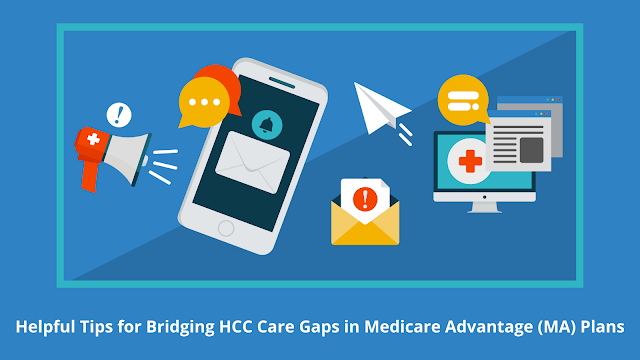
Helpful Tips for Bridging HCC Care Gaps in Medicare Advantage (MA) Plans

 The Centers for Medicare and Medicaid Services (CMS) pays MedicareAdvantage (MA) Plans for each insured participant, giving preference to older and disabled adults who meet the criteria. Apart from hospice care, the MA coverage is the same as Part A hospital, Part B medical, and Part D prescription medication coverage.

Instead of being provided by the federal government, the Medicare Advantage Plans, often known as Part C or MA Plans, are provided by Medicare-approved private organizations that must adhere to Medicare's regulations. They often include hospitalization, medical care, and prescription medication coverage. Healthcare companies get a predetermined monthly premium for insurance coverage and charge enrollees for out-of-pocket expenditures.


MA Plans and Hierarchical Condition Categories (HCC Coding)


CMS-HCC Coding system compensates Medicare Advantage Organizations (MAOs) differently depending on condition prevalence and demography. Approximately 9,000 ICD-10 codes are classified with a risk factor. Weighting or a stratification assigns higher scores to more severe issues. Must report conditions annually under the HCC Coding framework.


Bridging HCC Care Gaps and Ensuring Effective Code Tracking


It is critical to document all HCC codes for the ascribed members to provide correct risk adjustment scores and total payer allocations.


Healthcare organizations can close HCC Care Gaps by following these helpful tips: 


1)      Check Patients once a year


Diagnoses must be obtained through face-to-face consultations and reported on an annual basis. Plan ahead of time and develop comprehensive outreach strategies.

2)       Plan ahead of time for patient visits


Assist physicians in identifying HCC patients ahead of time so that activities like chart prep, issue list reviews, and morning huddles can be more impactful and focused.

 3)     Use Appropriate Forms


Use Patient Assessment Forms (PAFS) or Comprehensive Health Assessments (CHAs) to collect comprehensive and accurate diagnoses at the point of care.


4)      Automated chart review process 


Utilize techniques to monitor high-value interactions that require coder review, optimize your workflow, and guarantee that HCC coding is completed before claim submission.


5)      Determine Performance Indicators

Evaluate the Key performance indicators and data that the team should monitor to operate successfully, and then develop timely, consistent reports on important reimbursement drivers like:

 a. Recapture rate of HCC (by location and provider)

 b. Patient risk adjustment score trending

 c. Patients with severe illnesses that must be scheduled


6)      Assemble the Correct Team

Healthcare providers must receive assistance to finish the documentation and HCC data analysis. If required, consider hiring additional support personnel.


Tuesday, December 28, 2021

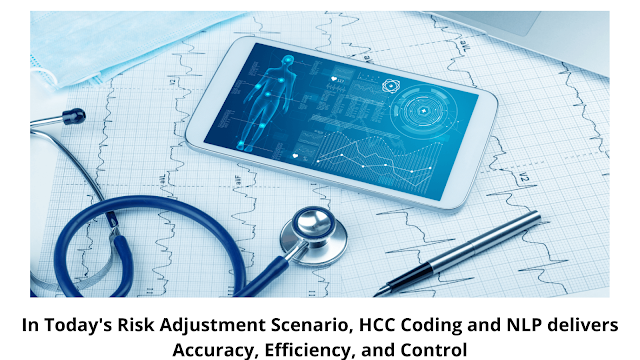
In Today's Risk Adjustment Scenario, HCC Coding and NLP delivers Accuracy, Efficiency, and Control

Value-based care has evolved as an alternative to the conventional fee-for-service paradigm, emphasizing quality above quantity. Consequently, high-tech Risk Adjustment Solutions are becoming increasingly popular among health plans for premiums and overall financial performance, prompting them to seek approaches to improve the effectiveness and ROI of their risk adjustment plans.


Value-based care (also known as Accountable Care and Population Health Management) has gained popularity, owing to the fact that the value-based compensation model incentivizes clinicians to deliver the finest treatment at the lowest possible cost. As the term implies, the patients are getting more value for the money.

Risk Adjustment Solutions employ Hierarchical Condition Category (HCC Coding) and Natural Language Processing (NLP) to formulate a complete Risk Adjustment action plan that engages both clinicians and patients in a diverse range of value-based insurance coverage initiatives, such as ACOs, Direct Contracting (CMS), Comprehensive Primary Care Plus (CPC+), and many others.

The Use of HCC Coding Induces a Reimbursement Transition

HCC Coding is critical to the financial viability of a healthcare organization. When HCC codes are properly recorded, they generate an accurate representation of a patient's condition. Furthermore, the application of HCCs frequently results in appropriately increased remuneration to meet the expenses of providing care under value-based policies.

By using a patient's diagnostic coding history, the HCC Coding procedure generates an RAF score for a patient that indicates his or her health condition. This score is then multiplied by a base rate under Medicare Advantage to determine the Per Member Per Month (PMPM) capitated compensation for the near term of coverage. The fixed cost is estimated when this is averaged throughout an entire payer-defined demographic.

Enhancing Risk Adjustment With NLP

Natural language processing (NLP) can interpret unstructured patient information in useful medical information to assist healthcare organizations in efficiently identifying risk, care gaps, and improving both qualities of care and economic performance. Without a question, NLP-enabled new tech is becoming a valuable tool for achieving risk-adjustment success.

NLP-aided risk stratification adds significant value since it allows coders to target on the suitable members first and then navigate their way down the priority list.

NLP technology evolves coder efficiency as well as quality. The first pass review is performed by NLP, which provides coders with a collection of diagnosis codes to evaluate while decreasing the quantity of data they must first submit.

Through enhanced chase targeting and automated data extraction, NLP can expedite the data recovery procedure, eliminating or dramatically reducing chart chase difficulties and saving both sides time, expense, and irritation.


Wednesday, December 22, 2021

Things You Need To Know About HCC Coding, Risk Adjustment, And Physician Income

A suitable and sufficient Risk Adjustment Solution enables healthcare professionals to harness their statistical information across the data flow and boost their retrospective and prospective operations. It also aids in ensuring that reimbursement is both appropriate and cost-effective.

A successful Risk Adjustment Solution stipulates that the recipients' health issues, health outcomes, and demographics in a Medicare Advantage (MA) and Affordable Care Act (ACA) program are cautiously recorded. The healthcare practitioner who administers those recipients is sufficiently reimbursed for the monitoring and management.

Hierarchical Condition Categories (HCC), a Risk Adjustment (RA) model that has been here for quite a while now, had gained much traction when MA Plans began requiring RAF scores for financial compensation. Medicare is advocating for additional value-based initiatives to lower net costs and enhance the quality of treatment for Medicare beneficiaries. Healthcare payers are also cutting costs after adopting value-based reimbursement strategies.

Understanding HCC Coding:

Centers for Medicare and Medicaid Services (CMS) utilizes HCC Coding to compensate Medicare Advantage plans depending on their enrollees' healthiness. It accurately reimburses for patients' estimated cost spending by altering reimbursements according to demographic data and patient health conditions. The risk evaluation data is based on diagnostic data derived from claims and health records gathered by physician offices,. inpatient and outpatient visits, and clinical settings.

The Secret of Success Is Accuracy

According to the CMS-HCC model, physicians must accurately report accurately on each patient's risk adjustment diagnosis. In other words, each individual diagnosis generates the RAF, and the score is used to assess payers coverage and potential future spending associated with each patient.

HCC Coding Solution:

1)      The HCC Coding Solution helps to verify patients' HCC grading status, which, when correctly documented, will enhance the patient population's aggregate RAF score and represent premium funds.

2)      It detects patients that have HCC coding potential while they are in the physician’s exam room

3)      It verifies that practitioners receive a complete amount of income owed to them for diagnoses and delivering care.

Physician’s Income:

Medicare Advantage providers quite often offer commercial plans, and it is arguable how closely MA physician income matches Traditional Medicare (TM) rates vs. negotiated commercial rates. However, the TM's administratively established rates serve as a critical foundation for physician compensation under the MA system, even while MA insurers successfully lower costs for other medical services that TM overspends. 

Changes in policy that shift the MA program toward specific premium support alternatives might significantly impact how physicians and some other practitioners are compensated.


Featured post

Traditional MIPS vs. MIPS Value Pathways: All You Need To Know

  MIPS reporting has changed considerably in recent years. The Merit-based Incentive Payment System has always required clinicians to report...