Showing posts with label Care management solution. Show all posts

Friday, April 25, 2025

Tech-Enabled Care Management for Better Patient Engagement

Healthcare organizations invest millions in clinical systems, yet still struggle with patient engagement. Effective Care Management creates meaningful connections between patients and care teams during those critical periods between office visits. Many providers rely on outdated processes and sporadic phone calls that fail to meet modern patient expectations.


Engagement Crisis in Healthcare

Patient disengagement creates serious problems:

  • Treatment plans are abandoned after hospital discharge
  • Medication adherence rates falling below 50% for chronic conditions
  • Preventable complications discovered only during emergency visits
  • Health questions accumulating until reaching crisis points
  • Vital clinical data never reaching provider records

The gap between clinical visits represents the most significant blind spot in healthcare delivery today.

Technology Transforms Care Management

Modern Care Management Solution extend clinical relationships beyond facility walls:

Real-Time Patient Monitoring

Traditional approaches relied on scheduled check-ins regardless of patient status. Today's CM platforms incorporate remote monitoring tools that detect concerning patterns as they emerge. This continuous data stream enables clinicians to prioritize outreach based on actual needs rather than calendar dates.

Two-Way Communication Channels

Patients need ways to ask questions without scheduling formal appointments. Secure messaging through the Care Management Program creates accessible communication pathways for addressing concerns promptly. These digital channels maintain clinical relationships while reducing unnecessary office visits.

Digital Care Plans

Paper plans often end up lost or forgotten. Interactive digital care plans deliver reminders, educational resources, and progress tracking directly to patient smartphones. This accessibility transforms static instructions into dynamic guides for daily health decisions.

Measuring Engagement Success

Organizations implementing tech-enabled Care Management programs typically achieve:

  • Higher care plan adherence rates
  • Significant reduction in missed appointments
  • Measurable increases in patient activation scores
  • Earlier identification of complications
  • More accurate between-visit assessments

These improvements drive both clinical outcomes and financial performance under value-based payment models.

Building Sustainable Patient Relationships

Forward-looking organizations create Care Management approaches that:

  • Connect through patients' preferred communication channels
  • Adjust engagement strategies based on technical comfort levels
  • Convert passive recipients into active participants
  • Generate actionable insights from patient-reported data
  • Maintain consistent support across care transitions

Effective engagement recognizes individual preferences while providing reliable guidance throughout the entire care journey.

About Persivia CareSpace®

Persivia offers a comprehensive Care Management Platform called CareSpace® that combines patient engagement tools with clinical workflows. Our solution helps organizations maintain meaningful connections between visits while generating actionable insights from patient-reported data. With Persivia, healthcare providers transform episodic encounters into continuous healing relationships. Explore more here. 

Thursday, December 5, 2024

How Is A Care Management Platform Better Than Traditional Systems?

Healthcare is intricate. Paperwork piles up. Patient records get lost. Communication breaks down. Traditional healthcare systems have been struggling with these problems for years, and providers know it. A care management platform offers a different approach – one that actually solves real problems instead of creating more of them.

Real Problems with Old-School Healthcare Systems

Healthcare providers face massive challenges with outdated systems:

  • Endless paperwork that takes time away from patient care
  • Medical records scattered across multiple platforms
  • Communication gaps between different healthcare teams
  • Slow response times for critical patient information
  • High risk of human error in record-keeping 

These aren't minor inconveniences. They directly impact patient care and organizational efficiency. Doctors spend more time fighting with technology than treating patients. Nurses juggle multiple systems, hoping they don't miss crucial information. Administrative staff get buried under mountains of paperwork that seem to multiply overnight.

What Makes Care Management Platforms Different

A CM platform isn't just another digital tool. It's a complete rethinking of how healthcare information should work:

  • Single source of truth for patient information
  • Real-time updates across all departments
  • Simplified communication channels
  • Automated routine administrative tasks
  • Comprehensive patient tracking 

Instead of searching across many systems, healthcare providers may find all they need in one place. You can obtain patient histories, treatment plans, and prescription information with a few clicks.

Realistic Advantages for Healthcare Organizations

Numbers matter in healthcare. Care management solutions deliver concrete improvements:

  • Reduced administrative workload
  • Faster patient intake processes
  • More accurate billing and insurance claims
  • Better resource allocation
  • Improved patient tracking and follow-up 

Organizations can actually focus on what matters: patient care. The technology does the heavy lifting of information management, allowing medical professionals to do their jobs more effectively.

Patient Experience Matters Most

Patients aren't just numbers. They're people seeking help during vulnerable moments. A good care management approach transforms their experience

  • Easier appointment scheduling
  • Quick access to personal medical records
  • More transparent communication with healthcare providers
  • Simplified prescription management
  • Proactive health monitoring 

Patients feel heard. They feel supported. They understand their own healthcare journey better.

Technology That Grows With You

Healthcare is always changing. A modern care management solution isn't a fixed system – it's a flexible platform that adapts:

  • Seamless integration with emerging technologies
  • Scalable infrastructure
  • Regular updates based on healthcare industry needs
  • Advanced security protocols
  • Compliance with evolving medical regulations 

Persivia understands that healthcare technology should simplify, not complicate. Let's talk. Your patients deserve a better system, and we're here to make it happen with our healthcare platforms.

Thursday, October 19, 2023

How Does The Care Management Platform Improve Payer’s Operations?

In today's rapidly growing healthcare industry, efficient care management is crucial for insurance payers to ensure the well-being of their beneficiaries and manage costs effectively. The emergence of the Care Management Platform has revolutionized the way payers operate, bringing about a paradigm shift in healthcare management.

The Role of Care Management for Payers

Care Management for Payers involves proactively coordinating and overseeing the healthcare services provided to their beneficiaries. It aims to ensure that patients receive appropriate care, monitor their progress, and manage their healthcare expenses effectively.

Benefits of Implementing a Care Management Platform


  • Improved Efficiency 

One of the primary advantages of a Care Management Solution is the significant improvement in operational efficiency. Payers can automate many tasks, reducing paperwork and administrative overhead. This allows the staff to focus on more critical aspects of their roles.


  • Enhanced Patient Care 

Care Platforms empower payers to keep a close watch on the health of their beneficiaries. By doing so, they can identify health issues early, ensuring timely interventions and improved patient outcomes.


  • Cost Reduction 

Effective care management results in cost reduction for payers. By avoiding unnecessary hospitalizations or expensive treatments, payers can significantly cut down their healthcare expenditures.

Key Features of a Care Management Solution

To understand how the platform benefits payers, let's delve into the key features they offer.


  • Care Coordination 

CM Platforms facilitate better coordination among healthcare providers, ensuring that patients receive comprehensive and well-structured care.


  • Data Analytics 

These platforms provide powerful data analytics tools that enable payers to make informed decisions and identify areas where cost-saving measures can be implemented.


  • Patient Engagement 

Engaging patients in their care is crucial. Care Management Platform offers tools for communicating with beneficiaries, keeping them informed, and involving them in their healthcare decisions.

How Does Care Management For Payers Enhance Healthcare Operations?


  • Risk Assessment and Management 

Care Management Solution helps payers assess and manage risks effectively. By identifying high-risk patients, payers can allocate resources appropriately, reducing the likelihood of complications.


  • Streamlined Workflow 

The automation and integration of various tasks streamline the payer's workflow. This results in faster processing of claims, reduced errors, and improved customer satisfaction.


  • Compliance with Regulations 

Payers must adhere to strict healthcare regulations. CM Platforms assist in maintaining compliance, ensuring that the payer's operations align with legal requirements.

Takeaway! 

All in all, a Care Management Platform is a vital tool that significantly improves the operations of payers. It ensures that beneficiaries receive high-quality care while reducing costs and improving operational efficiency. With the ever-changing healthcare landscape, the adoption of these platforms is not only a trend but a necessity for insurance payers.

 Reach out to Persivia to learn more about it!  


Friday, October 29, 2021

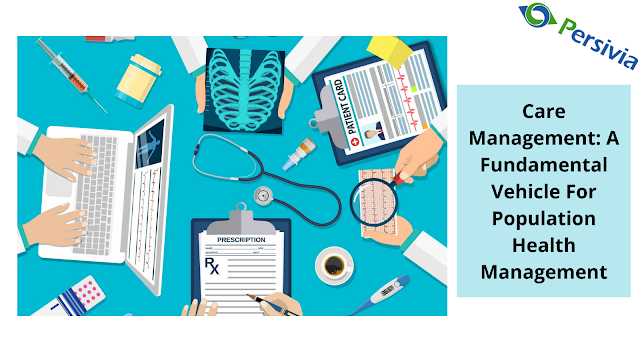
Care Management: A Fundamental Vehicle For Population Health Management

 Care Management (CM) is a crucial tool of the Population Health Management Platform. It is a combination of activities aimed at improving patient care and lowering the healthcare cost by boosting care coordination, eliminating redundancy, assisting patients, and clinicians in successfully managing health concerns. These strategies have shown effectiveness for improving quality and controlling healthcare spending for patients with complicated diseases.

Care Management is based on the notion that effective interventions for people within a specific group will lower health risk factors and minimize healthcare costs. It also includes the care coordination initiatives required to assist chronic physical and mental health conditions’ management. An efficient and reliable CareManagement Solution can significantly assist healthcare professionals in achieving the care objectives.

Key Strategies of Care Management:

There are three primary strategies to supporting CM for the high-risk group of individuals:

  • Identify the group of individuals whose health risks are manageable.
  • Integrate Care Management services to fulfill the needs of a group of individuals.
  • Select, train, and organize competent staff to provide the specific care services.

Effective care management necessitates coordination and cooperation. Clinicians, caregivers, patients, and healthcare workers must work collaboratively to assist the patient in taking control of their complex medical needs. A comprehensive CM can enable healthcare organizations to decrease expenses while optimizing care quality and efficiency.

Health Plans Supporting Care Management:

Both the Centers for Medicare & Medicaid Services (CMS) and private insurers have started to fund the implementation of CM services by either directly paying for the healthcare services or indirectly paying for the procedures and outcomes leading to successful Care Management.

Patient variables may benefit from Care Management Solutions, including gender, age, metabolic parameters, lifestyle factors, chronic condition severity, and some psychosocial issues – for example, caregiver support, help providers, and health plans to classify a group of individuals and communities.

Policy ideas that value practices for attaining the triple aim can assist in the formulation and execution of Care Management initiatives, and also ensure overall sustainability. Private health insurers can also provide non-financial assistance for practitioners’ practice transformation through mentoring, training collaboratives, and the cooperation of payer-funded Care Management.

Bottom Line:

The Care Management concept has evolved as a significant practice-based strategy of the Population Health Management Platform to manage the health of individuals with complicated or persistent chronic conditions. By merging medical protocols, research, information technology, support, and guidance, the CM plans can enhance care quality while helping patients maintain a healthy lifestyle. 


Featured post

What Determines Digital Health Platform Long-Term Value?

Digital Health Platform selection changed from checking features to judging longevity. Healthcare organizations cannot afford platforms wor...